

How a proxy server ensures corporate network security
15.04.2026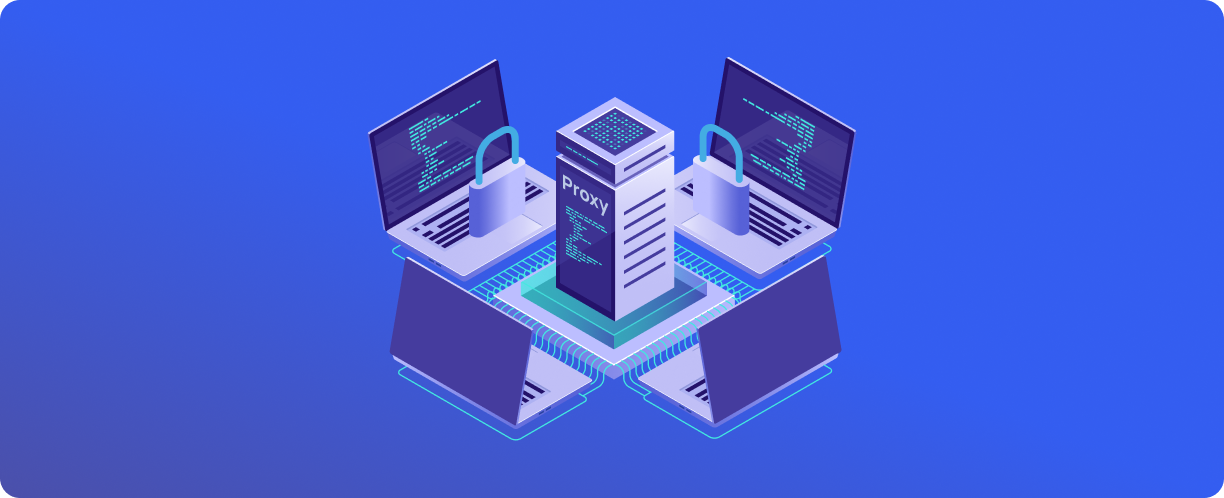
Any company with an office, employees, and internet access will eventually face the need to manage what happens at the edge of its network. Not because it doesn’t trust its staff, but because the internet is an environment with a high density of risks. One click on a phishing link, one downloaded program from a questionable site — and the internal network is already under threat.
A proxy server in such conditions becomes a tool that allows you to define traffic rules and control their enforcement.
How a proxy server works. The importance of digital security for companies
A proxy server is a node through which all (or specified) traffic passes between employees and external resources. A computer sends a request not directly to a website, but to the proxy. The proxy processes the request, applies configured policies to it, and either forwards it or blocks it. The response returns through the same chain.
In a corporate network, this makes it possible to centrally manage access without relying on each employee to take care of security on their own.
Core functions related to protecting a corporate network
- Traffic filtering. The proxy checks where requests are going and what data is being transmitted. If a resource is on the blacklist (entertainment portals, file-sharing services, unverified storage), the connection is not established.
Why: to reduce the risk of malicious code entering through non-work-related internet usage.
- Access control. You can configure different permissions for different groups of employees. Accounting gets access only to banking and tax resources, developers — to technical documentation and repositories, others — to a basic set.
Why: to reduce the attack surface.
- Masking internal structure. When an employee accesses the internet through a proxy, external servers see the proxy’s address, not the real IP of the workstation.
Why: this makes it harder for attackers trying to identify vulnerable nodes.
- Caching. The proxy stores local copies of frequently requested pages and files. On repeated requests, content is delivered from the cache without contacting the external network again.
Why: to reduce data transfer volume and minimize points of contact with potentially unsafe resources.
- Content inspection. Some proxy servers integrate with antivirus and data loss prevention systems. They analyze transmitted files, block attempts to send confidential data outside, and can also detect downloads containing suspicious code.
Using proxy servers in a comprehensive cybersecurity system
A proxy does not operate in isolation. Its logs are usually sent to incident monitoring systems (SIEM), where they are analyzed together with data from firewalls and antivirus tools. The proxy becomes a source of early detection of abnormal behavior: for example, an employee visits a suspicious site, then downloads a file, and shortly after their device starts connecting to unknown servers.
In companies with multiple offices, proxy servers in each branch can be configured with unified policies, ensuring the same level of protection regardless of geography.
Advantages of implementing a proxy server for companies
- Visibility of network activity. The administrator gets an objective picture: who sends what data, where, and how much. Without this, it is impossible to detect either accidental leaks or signs of device compromise.
- Reduced risks associated with the human factor. Employees may unknowingly click dangerous links or install unsafe software. A proxy limits the consequences without requiring each employee to have deep knowledge of cybersecurity.
- Centralized management. Changes to access policies are applied to everyone at once, eliminating the need to configure each device individually.
- Channel optimization. Caching reduces the load on the external internet channel, which is important when bandwidth is limited or the number of employees is large.
Conclusion
A proxy server in a corporate network helps manage traffic and control security. It allows you to hide internal infrastructure, filter unwanted connections, control access, and keep records of network activity.
Choosing a proxy for business requires attention to stability, IP cleanliness, and the ability to centrally manage. Belurk offers solutions that can be integrated into a corporate environment: with predictable speed, available support, and transparent terms. Connect a tool that truly works as part of an overall security system.
Try belurk proxy right now
Buy proxies at competitive prices
Buy a proxy