
The Role of Proxies in Ensuring Privacy in Big Data Analysis
04.02.2026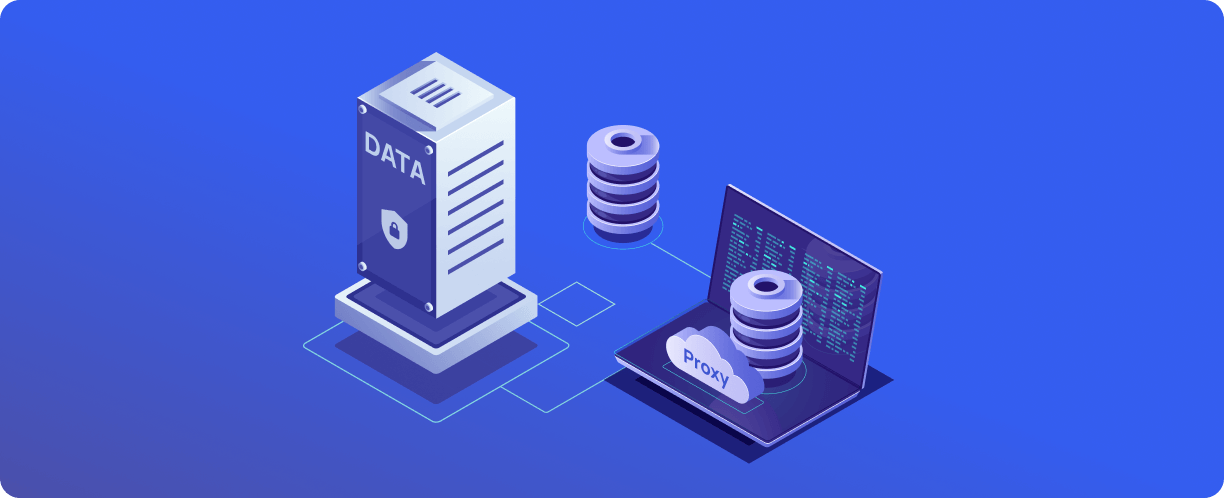
Data is one of the main assets of a business. It helps to understand what is really happening with customers, how products and processes work, where savings are possible, and what delivers the greatest value. But along with opportunities come higher requirements. It is necessary to respect people's privacy and follow the rules so that personal information does not end up where it should not. That is why approaches are emerging that make it possible to extract useful insights from very large datasets without revealing personal details or violating customer trust.
What big data analytics is and why companies need it
Big data analytics is the search for useful information in very large and diverse datasets that come from different sources: websites, mobile applications, sensors, transactions, etc. The goal is to discover patterns, make forecasts, and provide recommendations that help make well-grounded decisions.
Why data analytics is needed
-
Better understanding of customer needs and behavior, and the ability to offer suitable products and services.
-
Process optimization, resource planning, and reduction of downtime.
-
Faster and more accurate identification of development and investment directions based on data.
-
Discovery of unmet needs, idea testing, and faster time-to-market.
-
Early risk detection and compliance with rules and regulations.
-
Identification of trends, new markets, and growth opportunities.
The role of proxy servers in the information processing process
To manage massive data flows safely and efficiently, proxies are used as intermediaries between devices inside a company and external services. They help protect people's privacy, comply with rules, and at the same time speed up data processing.
What a proxy server is
A proxy server can be thought of as an intermediary between you and the internet. It "stands" between your device and the rest of the web, sends requests on your behalf, and receives responses.
How a proxy works in three steps
-
You send a request to the proxy server instead of directly to a website or online service.
-
The proxy forwards your request to the target site and receives the response.
-
It then returns the response to you. During this time, the proxy can hide part of your information, store copies of frequently requested pages (to load faster), and filter traffic.
Privacy and big data
Big data contains not only valuable business information but also personal details about people. Ensuring privacy helps maintain customer trust, reduce the risk of harm, and comply with rules that require careful handling of personal information. Regulators in many countries require data minimization, protection of transmitted information, and control over who has access to data, so companies often look for ways to work with data safely and transparently.
Key risks in collecting, transmitting, and storing information
Risks exist throughout the entire data lifecycle and can undermine trust, violate rules, and put a company's security at risk.
-
At the collection stage, excessive personal information is often captured, goals may lack transparency, and collection may occur without explicit user consent.
-
During transmission, there is a risk of interception, unauthorized viewing, configuration errors, and transfer to third parties, especially in cross-border transfers and when metadata is involved.
-
At the storage stage, the likelihood of unauthorized access, weak protection, backup issues, and retention of outdated or poorly described data increases, which can distort analytics.
How proxies help protect data in analytics
Proxies can mask identifiers and replace personal fields with anonymized values so analytics works with data without linking it to specific individuals. They help limit the volume of transmitted information by sending only what is truly necessary for the task to the analytics system.
Secure transmission is ensured through encryption so that data cannot be read along the path between sources and analytics systems. Centralized access control through proxies makes it possible to manage who sees which data and to keep audit logs. Network segmentation and reduced attack surface help isolate data sources from analytics systems so that leaks can occur only within a limited part of the infrastructure.
Proxies support data masking during aggregation so that final metrics do not contain personal details, and they help enforce retention and usage policies so data is deleted or anonymized after use. In collaborative analytics, a proxy enables sharing only the information that is necessary without disclosing personal data.
The use of proxies in big data infrastructure
In infrastructure, a proxy acts as a layer between data sources, processing systems, and visualization tools. It helps manage the data flow: from what data is collected and how it is processed to how it is presented to users through panels and dashboards.
Data collection
Proxies are placed between data sources (log files, sensors, web APIs, event streams) and the systems that feed them into storage and analytics platforms. Through a proxy, content can be filtered at the source level, personal fields can be removed or replaced, transmitted information can be minimized, data can be standardized into a uniform format, and secure authentication can be enforced. Proxies often also cache frequently requested data to speed up collection and reduce load on sources.
Request filtering and routing
A proxy can control which requests go to which storage systems or computing nodes. This includes filtering by access level, applying privacy rules, rate limiting, and load balancing across multiple servers. A proxy can direct sensitive datasets to more secure environments rather than general analytics flows and provide centralized control over what data leaves the organization.
Integration with visualization and data processing tools
A proxy can serve as a single entry point for visualization tools (Tableau, Power BI, Looker, etc.) and processing systems (Spark, Presto, Hadoop, etc.). It simplifies connections to various sources, transforms data formats, manages authentication and sessions, enforces consistent access policies, and keeps activity logs. Through a proxy, analysts and BI users can be given anonymized or aggregated datasets without exposing individual records. A proxy also helps meet data requirements, manage schema versioning, and maintain a unified approach to regulatory compliance and privacy policies.
Benefits of using proxies for privacy protection
-
Masking and anonymization. A proxy can remove or replace identifiers so analytics works with data without linking it to a specific person.
-
Data minimization. Only the data necessary for the task is transmitted, without extra fields.
-
Encryption and secure transmission. Data travels through encrypted channels, reducing the risk of interception.
-
Centralized access control and auditing. Unified access policies, centralized monitoring, and logs make it easier to track who uses what.
-
Isolation and reduced attack surface. Network segmentation and a proxy layer reduce the risk of leaks through direct access to sources.
-
Compliance support. Easier adherence to privacy and regulatory requirements through unified policy and transparent access records.
-
Simplified collaborative analytics. Only the necessary data can be securely shared between departments and partners without revealing personal details.
Limitations and recommendations
Limitations
-
A proxy is not a panacea. Proxies help reduce risks but cannot fully protect data on their own. When properly combined with other measures, they can significantly improve privacy, but the risk of deanonymization or leaks may remain in case of errors or abuse.
-
Adding a proxy layer can slow down data collection and processing. With large volumes, this is especially noticeable, and capacity must be planned in advance.
-
Incorrect filtering rules, misconfigurations of access, or outdated policies can lead to unintended data exposure or blockage of parts of analytics.
-
Proxies often log transmitted data or metadata. If logs are not properly protected, they themselves become a source of leakage.
-
Not all tools work well through proxies. Process adaptation or changes in system interaction methods may be required.
-
Data transfer through third-party providers may fall under data protection and localization laws. It is important to understand where data is physically processed and which rules apply.
-
If a proxy partner does not perform as expected, the organization may face disruptions in analytics and service.
Recommendations
-
Determine which data needs protection, what level of privacy is required, and which risks are acceptable in your case.
-
Transmit only what is truly necessary for analytics. Whenever possible, use anonymization, aggregation, or selective data subsets.
-
Combine proxies with other protection measures: encryption in transit and at rest, access restrictions, masking of sensitive fields, and the use of anonymized data copies.
-
Create a data flow map, define data owners, data classes, and rules for who can see what through the proxy.
-
Use strong authentication, role models, and user activity auditing through the proxy.
-
Implement continuous monitoring of activity, unusual access attempts, and violations. Regularly conduct independent audits of policies and settings.
-
Develop an incident response guide for leaks or breaches, including notifications, system isolation, and data recovery.
-
Take into account data protection laws, data subject rights, and transfer rules.
-
Whenever possible, inform customers and users about how their data is protected and processed within analytics.
Belurk is a stable and flexible solution for working with proxies. It is designed to support operations in different conditions and adapt to various data analytics scenarios. The terms of using Belurk proxies are clear and transparent, the infrastructure is proven, and it can scale as your needs grow.
Belurk helps to:
-
Maintain the required level of privacy without blocking useful data.
-
Ensure control over who sees which data through the proxy.
-
Scale seamlessly as data volume and the number of users grow.
-
Resolve connection issues promptly if they arise.
Try belurk proxy right now
Buy proxies at competitive prices
Buy a proxy