
Tips for safely buying proxies online
23.01.2026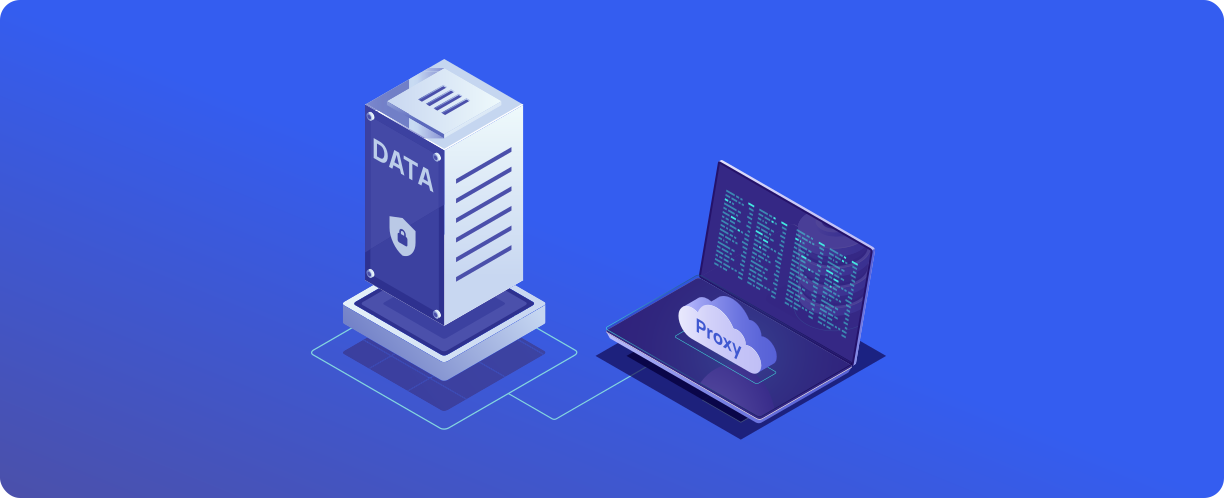
Buying proxies online may seem like a simple task, but it often comes with hidden risks that are better understood in advance. Below, we explain how to approach proxy selection responsibly and avoid mistakes that can cost you time, money, or privacy.
What a proxy is
A proxy is a simple yet powerful tool. It acts as an intermediary between your device and the internet. When you send a request through a proxy, a third-party server forwards it further and returns the response to you, so the destination website sees the proxy’s IP address instead of your real one.
A proxy is not a single technology, but a set of different solutions designed for different tasks.
- HTTP/HTTPS proxies work with web traffic and are suitable for browsers and APIs; HTTPS provides encryption between you and the website when configured correctly.
- SOCKS5 is more versatile and suitable for torrents, games, and applications where arbitrary traffic is required.
Why security matters when buying proxies
-
A proxy provider can see a significant portion of your traffic: destinations, requests, and—if encryption is not used—even passwords. If the provider keeps logs, this data may be sold, stolen, or disclosed to third parties upon request.
-
An unreliable provider may use your connections for fraudulent activities or attacks. As a result, the IP address you are using may become associated with malicious activity, leading to blocks or even inquiries from law enforcement.
-
Even from a business perspective, using “tainted” IP addresses leads to bans, account losses, and financial damage, which is why security is not optional but essential.
Key risks of buying proxies from unreliable providers
-
One of the most serious risks is logging and data leakage. A provider may store connection logs (who connected, when, and where), and if these logs are accessed, your activity becomes exposed.
-
Another risk is traffic interception and modification. A proxy can alter website responses, inject advertisements, or add malicious scripts—especially if the traffic is not protected by HTTPS.
-
Technical issues with unreliable providers often appear as low speed, high latency, and unstable connections, making proxy usage practically useless.
-
Unverified sellers sometimes misrepresent proxy characteristics. For example, they may advertise residential proxies but deliver data center IPs, or promise a unique dedicated IP while actually selling shared public addresses.
Benefits of a secure purchase
Personal data protection
Secure proxy purchasing provides clear advantages when it comes to protecting personal data. By choosing a trusted provider with a transparent logging policy and encrypted connections, your requests and credentials are far less likely to be stolen or sold to third parties. Information about which websites you visit, which accounts you use, and what data you transmit through the proxy remains confidential.
Reduced fraud risk
A reliable seller will not disappear after payment, provide fake data, or connect you to questionable networks. You are less likely to encounter fake trials, hidden fees, or proxies involved in illegal activity. As a result, both your money and time are protected, and the likelihood of chargebacks or investigations is minimized.
Long-term stability and connection reliability
A secure purchase contributes to the durability and stability of connections. Providers that prioritize security and transparency typically maintain their infrastructure, update software, and monitor IP quality. This leads to fewer connection drops, lower latency, and higher throughput. For tasks where stability is critical (parsing, automation, working with web services), this means less downtime and more predictable outcomes.
Reliable multi-account usage
High-quality dedicated or properly managed residential IPs carry a lower risk of bans and cross-account tracking. This allows you to safely operate multiple accounts at the same time without worrying that one compromised session will lead to all accounts being blocked. In practice, you get a functional tool that genuinely helps automate processes and manage multiple services with fewer risks.
Criteria for choosing a reliable provider
Transparent pricing and clear terms
An honest provider clearly shows what is included in each plan, how traffic and sessions are calculated, whether there are speed or IP limits, and how the refund policy works. This transparency ensures that no hidden conditions or unexpected fees appear after payment.
Customer support
When issues arise—speed drops, an IP gets banned, a refund is needed, or technical setup assistance is required—it is crucial that support responds quickly and professionally. Good support not only answers questions but also helps resolve issues, explains limitations, and offers IP replacements when necessary. Multiple contact channels (chat, email) and fast response times are strong indicators of reliability.
Privacy policy
It is important to understand what data the provider collects and how long logs are stored. Ideally, only technical metadata is retained, without traffic content. A transparent privacy policy reduces the risk of unexpected data disclosure to third parties and makes proxy usage safer for your privacy.
Belurk is suitable for users who value transparency and support. The platform openly presents its pricing and terms, provides communication channels for prompt assistance, and publishes its privacy policy, making it a solid option when choosing proxies—especially if reliability and responsive technical support are important to you.
What to consider before purchasing
Proxy type and task compatibility
Choose the proxy type based on your use case:
- HTTP/HTTPS for web automation and working with websites;
- SOCKS5 for various types of traffic and applications;
- residential IPs if you need more “natural” visibility for services;
- data center proxies for large-scale tasks where cost and speed matter most.
Speed and connection stability
Connection speed and stability directly affect performance. Slow or frequently interrupted connections make parsing, API interactions, and automation inefficient. When selecting a provider, request real latency and bandwidth metrics, test IPs in a trial environment, and check how long connections remain stable without drops.
IP geolocation
Geolocation matters if you need to appear as a user from a specific country or city. Check whether the provider offers IPs in the required regions and whether the address pool is large enough. A small pool leads to frequent IP reuse, increasing the risk of bans.
IP rotation and replacement options
This is critical for high-frequency request scenarios. Find out whether the provider offers a rotation API, supports sticky sessions (where one IP is bound to a session), and what rotation intervals are available. This helps maintain authorization states while avoiding blocks.
Limits on concurrent connections
Some providers limit the number of simultaneous sessions per IP or account, enforce traffic caps, or restrict requests per minute. Clarifying these limits in advance helps avoid workflow disruptions and ensures the selected plan can handle your actual load.
Practical tips for safe purchasing
Read reviews carefully
Look beyond testimonials on the provider’s website. Read feedback in independent chats and forums, and pay attention to review dates and details. Real discussions and user questions reveal far more than generic praise.
Connection security and authentication methods
Configure connections using the protocols you need, enable encryption where possible, and prefer authentication via username/password or IP whitelisting. If the provider offers IP rotation, clarify how it works: whether an API is available, if sticky sessions are supported, and whether IPs can be fixed for the duration of authorization.
Pay only through trusted payment methods
Use reliable payment systems and keep receipts—they are useful in case of disputes. If a seller pressures you to pay quickly or requests transfers to unknown wallets, it is better to walk away.
Common mistakes when buying proxies
There are several typical mistakes that are easy to avoid.
-
The biggest one is blindly choosing the cheapest option. Saving on the provider often results in data leaks, bans, and wasted time.
-
Many users trust only polished reviews on the provider’s website—never rely on them alone.
-
Purchasing public proxies for important accounts. When an IP is already used by others, the risk of bans increases significantly. Beginners also often forget to check limits on concurrent connections and traffic, which causes automated workflows to fail unexpectedly.
Conclusion
Buying proxies securely is not a lottery. It can be done easily and safely if you:
- verify the provider (transparent pricing and terms);
- review logging policies and authentication methods;
- test several IPs for speed, stability, and geolocation;
- check rotation options and connection limits;
- pay through trusted channels.
Belurk is a platform that meets security standards and provides a comfortable working experience. Belurk offers clear pricing information, accessible customer support, and a transparent privacy policy, making proxy selection far less stressful. Even with a trusted provider, however, we still recommend testing your workflows in a staging environment to fully confirm that the proxies meet your specific requirements.
Try belurk proxy right now
Buy proxies at competitive prices
Buy a proxy