

Anonymous Proxies: What Are They?
29.05.2026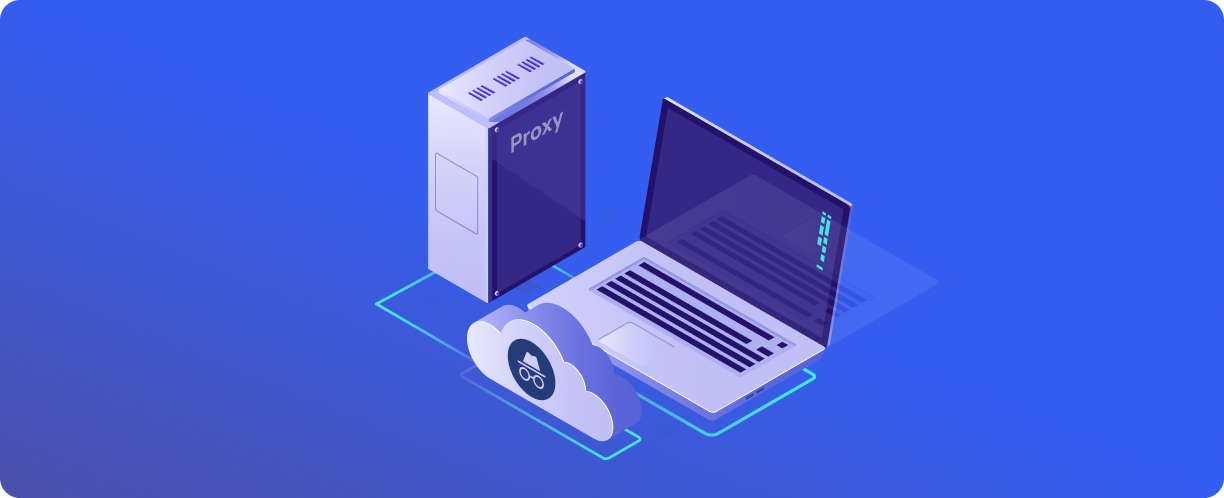
You visit a website, and it already knows which city you're from, what browser you're using, and even your screen resolution? Don't be surprised — this is standard data collection practice. If you don't want to leave such a detailed digital footprint, you should take a closer look at anonymous proxies. Let's figure out what they are, how they work, and why you might need them.
What are anonymous proxies
An anonymous proxy is an intermediary server that hides your real IP address when you access the internet. Instead of your address, the target website sees the proxy's address. However, the fact that a proxy is being used remains noticeable: the server understands that someone is accessing it through an intermediary, but it cannot determine who exactly is behind it.
It's important to understand that anonymity is not the same as complete invisibility. Your ISP can still see that you are connecting to a proxy, and the website sees that you are using an intermediary. But linking your activity to your real IP address becomes significantly more difficult.
How anonymous proxies work
When you open a website through a normal connection, your browser sends a request directly to the server. The request header contains your IP address, browser type, operating system, and other technical data.
- An anonymous proxy intervenes in this process. Your request first goes to the proxy server. The proxy removes your real IP from the header, substitutes its own, removes or changes certain identifying headers (such as Via or X-Forwarded-For), and sends the request onward. The website sees the proxy's data and cannot determine where the original request came from. The response from the website returns to the proxy, and the proxy forwards it to you.
What's important to understand
A proxy only hides your IP address, but does not encrypt traffic. If you enter a password or card details, they can still be intercepted if HTTPS is not being used. Your ISP can see that you are connecting to a proxy — it doesn't see what you do afterwards, but the fact of the connection itself remains noticeable.
Levels of proxy anonymity
Proxies differ in how thoroughly they hide your presence.
- Transparent proxies do not hide your IP at all. The website sees both your real address and the fact that you are using a proxy. Such proxies are typically used in offices or educational institutions for traffic filtering, not for anonymity.
- Anonymous proxies hide your real IP but leave signs in the headers that you are using a proxy. The website understands: "This user came through a proxy, but it's unclear exactly where from."
- Elite proxies (high-anonymity) completely remove all signs of a proxy. The website sees a normal request from a normal IP and cannot determine that an intermediary is involved. The request looks as if it was sent by a real user from that IP.
- Distorting proxies replace your IP with a random one but do not hide the fact that a proxy is being used. They are less common and are typically used for specific tasks like ad testing.
What are anonymous proxies used for
Working with web services
If you don't want websites to collect your data for advertising or analytics, an anonymous proxy helps maintain confidentiality. You view content, but the website does not link your viewing to your real location and device.
Testing websites and applications
Developers and testers often need to check how a website appears to users from different regions. Anonymous proxies allow them to simulate connections from other countries without physically moving. Important: this is not about bypassing restrictions, but about testing interface correctness.
Data parsing (information collection)
During mass data collection from websites, repeated requests from a single IP quickly attract attention. Anonymous proxies help distribute requests across different addresses, reducing the load on each individual server. This reduces the risk of IP blocking and allows for more even data collection.
Marketing and analytics
Advertising campaigns are tailored to different regions. Using anonymous proxies, marketers can check how ads are displayed in different geolocations, whether users see them, and what they look like. This allows them to adjust settings before launching a campaign at full budget.
Corporate tasks
Companies can use anonymous proxies to hide their internal network structure when accessing external resources. This is one element of corporate data protection.
Advantages of anonymous proxies
- Enhanced privacy. Websites do not see your real IP, meaning they cannot link your activity to a specific location or device.
- Reduced digital footprint. Every time you visit a website, you leave information about yourself. Anonymous proxies reduce the amount of this data. The website sees the proxy, not you.
- Flexibility when working with online platforms. You can test services, see how interfaces or content change depending on the region, collect information for analysis, and your main activity remains separate.
- Scalability of solutions. If you need to process thousands of requests or manage hundreds of accounts, anonymous proxies scale easily. The address pool can be expanded, rotated, and configured for specific tasks.
Limitations and risks
- Reduced connection speed. Traffic goes through an additional server, which almost always adds latency. With low-quality providers, the difference can be significant: pages will load noticeably slower.
- Possible technical errors. Unstable proxies may drop connections, respond slowly to requests, or return errors. This is especially critical in automation, where predictability is important.
- Data security concerns. Anonymous proxies hide your IP but do not encrypt traffic. If you are transmitting passwords or card details, make sure the site uses HTTPS. Otherwise, data can be intercepted on the path from you to the proxy or from the proxy to the site.
- Free proxies may keep logs, sell data about your activity, inject ads, or even infect your device with malware. Free proxy providers have to make money somehow, and often it comes at the expense of your data.
How to choose anonymous proxies
- Anonymity level. For most tasks, anonymous proxies are sufficient. If you need to completely hide the fact of using a proxy — choose elite proxies.
- Stability and speed. Pay attention to uptime and latency. This information should be publicly available.
- Logging policy. Find out whether the service keeps logs of your activity. If privacy is important to you, look for a provider with a no-logs policy (or at least transparent data retention terms).
- Server geography. If you need proxies in a specific country or region, check whether the provider has such servers.
- Proxy type. For most tasks, HTTP and HTTPS proxies are suitable. SOCKS5 is more universal but also more complex to configure.
The Belurk service offers proxies suitable for various tasks. Belurk provides good connection stability, a clear control panel, and support for necessary protocols, including SOCKS5 and HTTP/HTTPS. If you need reliable proxies without surprises, this is one option worth considering.
Common mistakes when using proxies
- Incorrect configuration. Errors in the address, port, or protocol type cause the proxy not to work. Always check the data before saving.
- Using the wrong proxy type. HTTP proxies do not work with traffic that is not web traffic. For games, torrents, or some applications, SOCKS5 is required.
- Ignoring service terms. Even when using anonymous proxies, you should comply with website terms of service. Excessive activity from a single address pool can lead to the entire pool being temporarily restricted.
- Neglecting testing. Don't test proxy performance in a live environment. First test on a small scale and make sure the speed is acceptable, the connection is stable, and websites respond correctly.
Conclusion
Anonymous proxies are a tool for those who want to control their digital footprint. They replace IP addresses, help test services in different regions, collect data without overloading websites, and solve marketing tasks tied to geolocation. But they also have limitations, including potential speed reduction, security risks when using free services, and the need for proper configuration. When choosing a reliable provider and following basic rules, anonymous proxies become a useful assistant for both individual users and businesses.
Try belurk proxy right now
Buy proxies at competitive prices
Buy a proxy